%2019vsm.jpg) |
Conjunction of the Moon and Venus (and Mercury in the twilight) seen from
Tenerife. The dormant volcano, Mt. Teide, is on the left and the highlands of La Palma are
visible above the sea of cloud lower right. |
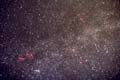 |
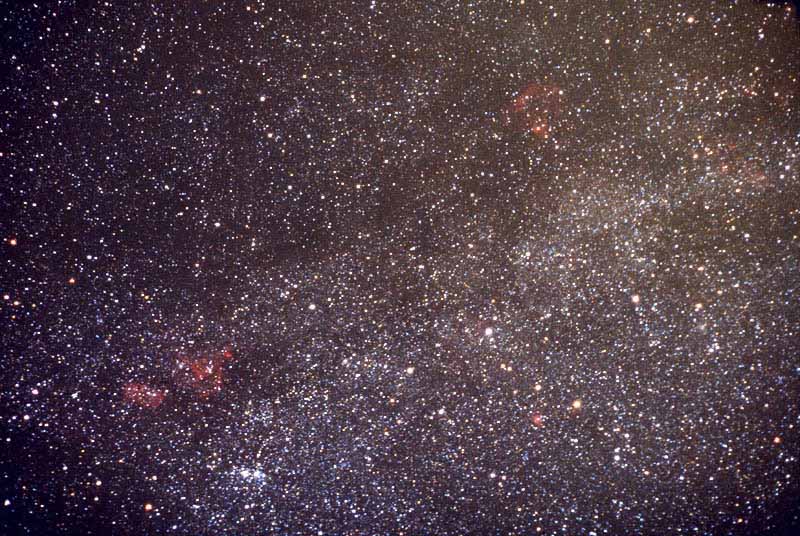
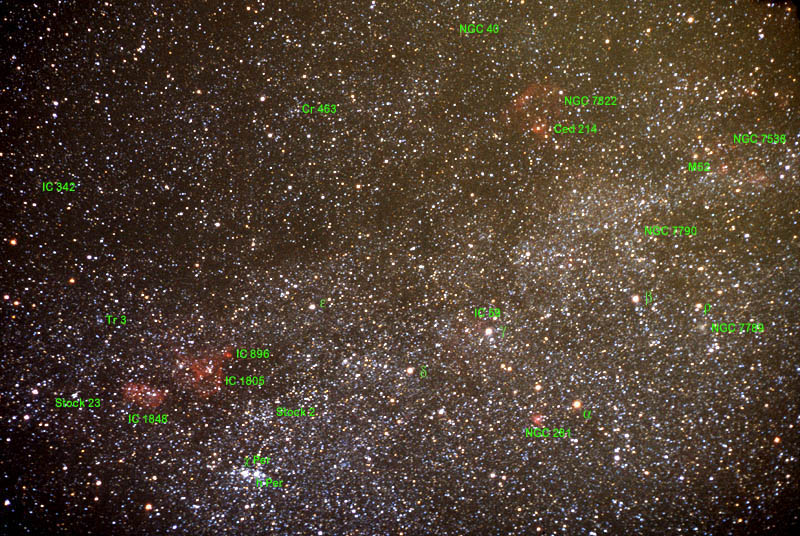
A super view centred on Cassiopeia taken in Nov 2001; 5 min exposure through
58mm lens at f/2. Here is an annotated version. |
 |
Auriga imaged through a 58mm lens at f/2 in Nov 2001; 5 min exposure. Here
is an annotated version. |
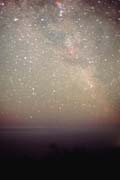 |
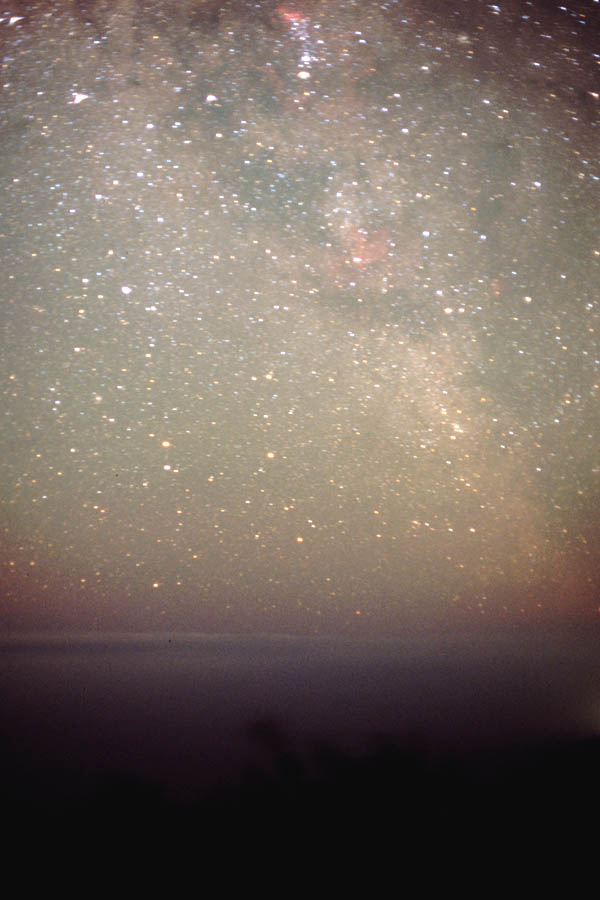
A image taken in August 2002 looking to the southern horizon over the
Atlantic Ocean. The deep southern constellations of Ara and Norma are displayed and the
Milky Way extends from the horizon to the tail of Scorpius. Numerous star fields, red
emission nebulae and dust clouds are present and fifth magnitude stars of declination
-61.5° are easily visible just above the horizon! 7 min exposure through a 58mm lens at
f/1.4. |
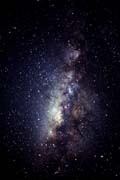 |
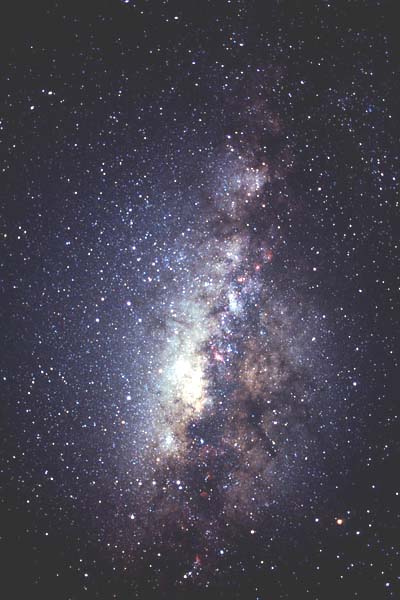
A view of the Milky Way looking towards the centre of our Galaxy from
Scorpius through to Scutum. The clusters M6 and M7 are prominent below centre.
Antares is the red star bottom right. 5 min exposure through a 28mm lens at f/1.8. |
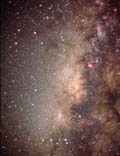 |
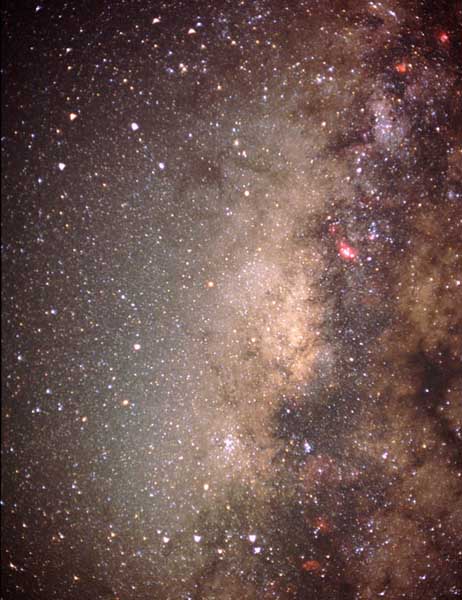
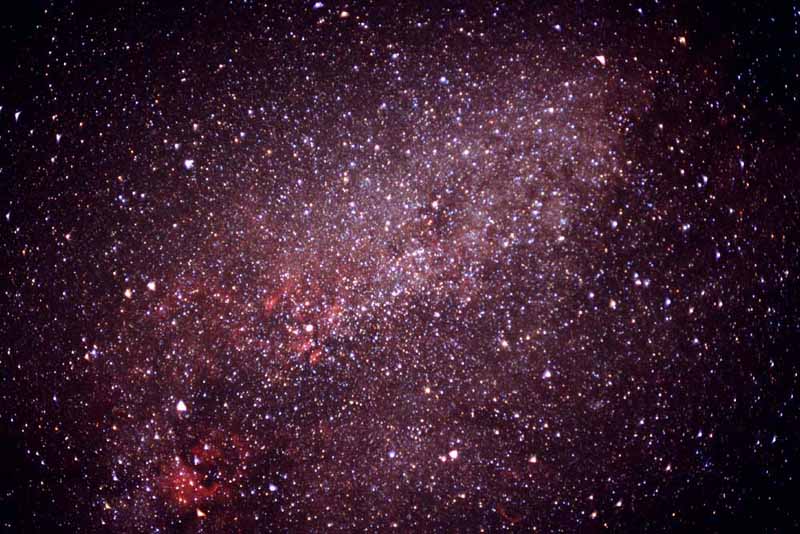
A close-up of the Milky Way in Sagittarius displays a wealth of detail.
Enjoy! The rich star cluster, M7, is below centre and the red emission nebula, M8, is very
prominent; 5 min exposure through a 58mm lens at f/1.4. |
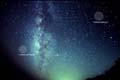 |
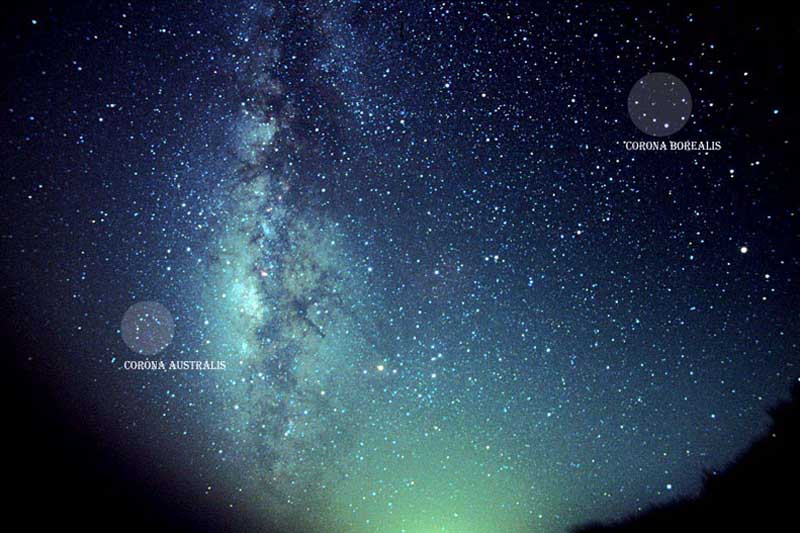
A very wide angle showing the two crowns, Corona Borealis and Corona
Australis, 10 min exposure through a 16mm lens at f/2.8. |
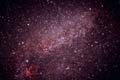 |
A view of Cygnus showing the Nth American and Pelican Nebulae bottom left,
nebulosity around g Cygni and the supernova remnant, the Veil
Nebula, are visible bottom centre. 5 min exposure through a 58mm lens at f/1.4.
|
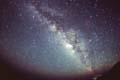 |
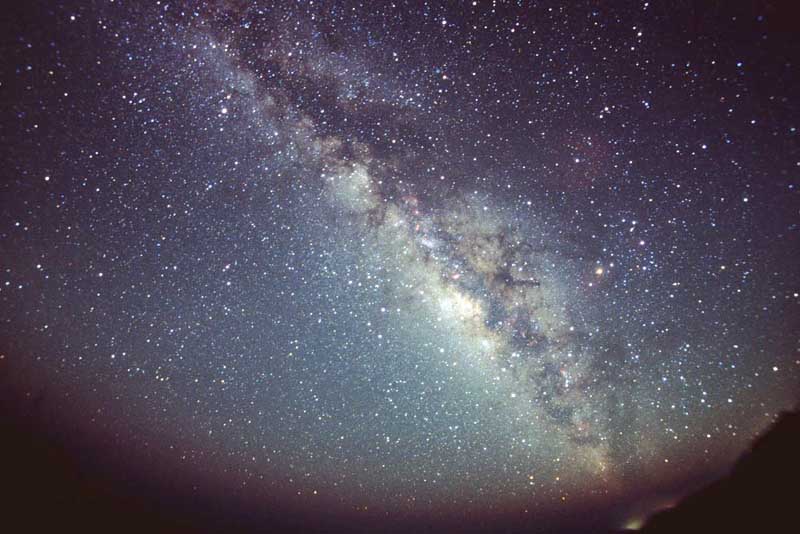
A very wide angle view showing the Milky Way stretching from Norma to
Sagitta; 15min exposure through a 16mm lens at f/2.8. |
%2019sm.jpg)